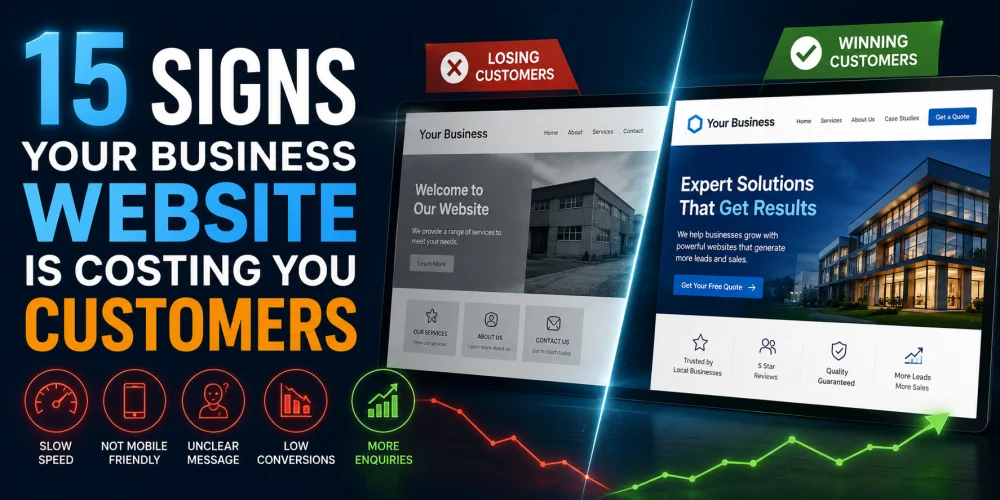
Your website needs a redesign if it is slow to load, not mobile-friendly, has a high bounce rate and low conversion rate, has an outdated design, has poor SEO performance, has difficult navigation, has broken features, or no longer reflects your brand. These are the ten clearest signs that your site is costing you business.
In this guide, we cover each of those signs in detail, explain why they matter, and show you what to do about them. If any of these sound familiar, it is probably time to act.
1. Your Website Has an Outdated Design
Your Website Doesn’t Match Your Brand Anymore
If your branding has evolved but your website hasn’t, you’re likely sending mixed messages to your audience. This disconnect between your current brand identity and your website’s look, feel, or messaging can confuse visitors and create a lack of trust. Inconsistent branding, such as outdated logos, mismatched colours, or an irrelevant tone of voice, dilutes your credibility and makes your business appear unprofessional or neglected.
This can significantly hurt your conversion rates, as customers are less likely to engage with a brand that doesn’t appear aligned or reliable. Among the 10 signs your website needs a redesign, inconsistent branding is among the most common and impactful. A well-executed redesign ensures your website is consistent with your latest brand identity, including your tone of voice, visual style, and core messaging, giving users a seamless and trustworthy experience that encourages them to take action.
Outdated Website Design Damages Credibility
An outdated website gives the impression that your business isn’t keeping up with modern trends or technology. Visitors may assume that if your site looks neglected, your products, services, or customer care might be outdated, too. This perception can damage your credibility, reduce user trust, and ultimately impact your bottom line. Users today expect fast, visually appealing, and intuitive websites—anything less can create friction and frustration.
Outdated layouts, old design elements, and non-functional features signal a lack of professionalism and attention to detail. As a result, potential customers will likely leave and turn to your competitors who present a more modern, engaging, and seamless online experience. Redesigning your website improves its appearance, shows your audience that your business evolves with time, and prioritises quality in every touchpoint.
2. High Bounce Rate and Low Engagement
Bounce Rate Is Through the Roof
If users land on your site and leave quickly without engaging, it’s a strong signal that something is wrong. A high bounce rate often means users aren’t finding what they expected due to poor content, a confusing layout, or slow page speed.
Lack of Calls to Action
Without clear, compelling calls to action (CTAs), users won’t know what to do next. CTAs guide visitors toward conversion goals like contact form submissions or purchases. A redesign allows you to strategically place CTAs that improve UX and encourage interaction.
3. Your Website Loads Slowly
Slow Page Speed Is Killing Your Rankings
In today’s fast-paced world, speed matters. If loading takes forever, visitors will leave, and search engines will notice. Google uses page speed as a ranking factor, so a slow website can lead to low search engine rankings. You can check your current performance using Google PageSpeed Insights.
Large Images and Poor Code Can Hurt You
Poorly optimised images, outdated plugins, and bloated code are common causes of slow websites. A redesign helps streamline these elements, significantly improving loading times and user satisfaction.
4. Your Website Is Not Mobile-Friendly
Not Mobile Optimised = Lost Opportunities
With most users browsing on mobile devices, not being mobile optimised is no longer acceptable. If your site doesn’t adapt to different screen sizes or feels clunky on mobile, you’re likely losing a large segment of potential leads.
Your Website Is Not Responsive
Responsiveness means your site automatically adjusts to fit any desktop, tablet, or mobile device. A website that’s not responsive causes a poor user experience and is a strong indicator that it’s time for a redesign.
5. Difficult Navigation Hurts User Experience
Your Website Is Difficult to Navigate
If users can’t find what they’re looking for within seconds, they’ll go elsewhere. Confusing menus, unclear labels, and broken links frustrate users and increase bounce rates.
Improved UX Through Better Structure
A redesign allows you to create a well-structured, intuitive layout. By improving the information architecture, you can deliver improved UX and easily guide users through the buyer journey.
6. Your Website Is Difficult to Update
You Rely on Developers for Small Changes
If making small edits (like adding a blog post or updating an image) requires help from a developer, consider a more manageable content management system (CMS). A difficult-to-update website slows your marketing efforts and increases costs.
Switch to a User-Friendly CMS
During a redesign, your site can be rebuilt on a platform like WordPress, allowing you to control your content and keep it fresh and relevant.
7. You’re Not Getting Leads or Sales
Low Conversion Rates Signal a Problem
If traffic is steady but sales or enquiries are low, your site may not be optimised for conversions. Poor design, lack of trust elements, or missing CTAs can all contribute to low conversion rates.
Time to Optimise for Business Growth
A redesign lets you focus on conversion-driven features such as better CTAs, simplified forms, lead magnets, and trust-building testimonials – all crucial for business growth.
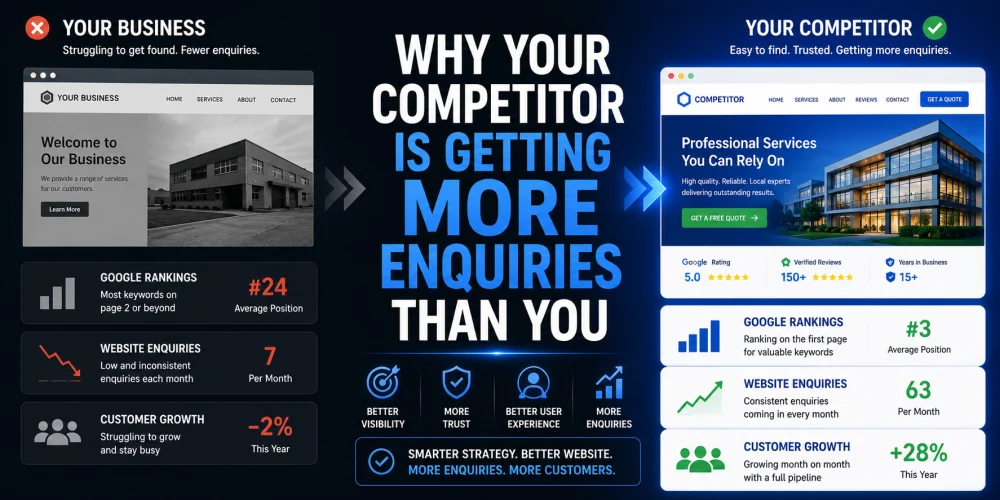
8. Your Competitors Have Better Websites
Your Competitors Outshine You Online
When your competitors offer a faster, more modern and user-friendly experience, potential customers will choose them over you. If their site is more appealing and functional, it’s time to level up.
Stay Competitive With a Modern Website
A fresh redesign helps you stay relevant and competitive in your industry. It’s not just about looks – it’s about functionality, mobile responsiveness, and meeting user expectations.
9. Your Website Has Bugs or Broken Features
Your Website Has Bugs
Broken contact forms, 404 errors, and non-functioning buttons create frustration and drive users away. Even minor bugs reduce trust and can result in lost revenue.
Fix Bugs with a Clean Slate
Redesigning allows you to rebuild your site with cleaner code, ensuring flawless operation across all devices and browsers.
10. Poor SEO Performance
Low Search Engine Rankings
If your pages aren’t ranking well on Google, outdated site structure, missing metadata, and slow speeds could be the cause. These are common in older or poorly maintained websites.
Redesign for Better SEO
A redesign allows for proper SEO setup, including:
- Optimised title tags and meta descriptions
- Fast-loading pages
- Schema markup
- Mobile responsiveness
All of these contribute to better search visibility and more organic traffic.
Final Thoughts: Redesign for Performance and Growth
Whether you’re battling a high bounce rate, poor mobile responsiveness, or an outdated website that no longer reflects your brand, recognising the 10 signs your website needs a redesign can be the first step toward transforming your online presence. It’s not just about aesthetics – it’s about creating a digital experience that aligns with your business goals and offers real value to your visitors.
A well-executed redesign can improve your SEO, boost your conversion rates, and future-proof your site for years to come.
FAQs
How often should I redesign my website? Most businesses benefit from a redesign every 2-3 years, or sooner if experiencing major issues.
What should I focus on during a redesign? Prioritise speed, mobile responsiveness, UX, and aligning the website with your branding and business goals.
Can I redesign without starting from scratch? In some cases, yes – but a full rebuild often allows for deeper performance, UX, and scalability improvements.
Our web design services cover everything from targeted improvements to complete ground-up rebuilds, tailored to your business goals. For guidance on what a high-performing site should include, see our guide on how to create high-converting B2C landing pages, and for mobile readiness, read our guide on how to make a website mobile-friendly.