The ChatGPT Business Hub is OpenAI’s new dashboard for claiming and managing how your business appears in ChatGPT. It launched in beta on 10 November 2026. In effect, it is the closest thing yet to a Google Business Profile for AI search.
For UK firms, the short version is this. eCommerce and online service businesses can claim a profile now. However, local shops and restaurants cannot do so yet. In addition, a claimed profile gives you control over your details and useful data, but it does not buy better recommendations.
This guide explains what the hub is, how it works and what it means for your business. It also covers where the platform is likely to go next, and the steps we recommend taking this month.
What is the ChatGPT Business Hub?
The ChatGPT Business Hub is a management area inside ChatGPT where a verified business controls its own profile. It forms part of a wider beta programme that OpenAI calls Businesses in ChatGPT.
You can open it from the ChatGPT sidebar or at chatgpt.com/business-hub. When we visited the page signed out, it offered two options. You can claim your business, or you can sign in to manage an existing listing.
The hub does three main jobs:
- Claim and verify. You show OpenAI that the business is yours, or that you have authority to act for it.
- Manage your information. You keep details such as your website, description, category, logo and policies up to date.
- See insights. You find out how often ChatGPT mentions your business and how many people click through to your website.
Eligible businesses can also build a Business Agent, which we cover below. OpenAI says 1.2 billion people use ChatGPT each week, so the potential audience is large.
One naming point causes confusion. Business Hub is not ChatGPT Business, which is the paid workspace plan that companies buy for their staff. Instead, the hub controls how the public sees you.
How the ChatGPT Business Hub works
Setting up a profile follows a clear sequence, and OpenAI’s setup guide describes each stage.
- Find your business. First, sign in to ChatGPT, open Business Hub and search for your business by name. If you run an eligible online business that is not listed, you may be able to add it.
- Verify your claim. Next, choose one of the methods on offer. These include a code sent to your business phone or email, a DNS record on your domain, or a Shopify connection. OpenAI then reviews the claim and emails you its decision.
- Pass the identity check. A provider called Persona then confirms who you are. Have official ID and your company registration details to hand, along with evidence that you can act for the business. The verified badge, a blue tick, appears only after this step.
- Edit your profile. Once approved, you control the basics: description, category, logo, cover photo and website link, plus your delivery and returns policies. OpenAI reviews changes before it publishes them.
- Connect a product feed. If you sell products, you can share prices and availability through a CSV file, a hosted feed or your Shopify catalogue.
- Read your insights. Finally, the Insights tab shows activity over the past 28 days.
What the insights measure
The insights cover mentions, website clicks and discovery topics. However, the mention count is stricter than it sounds. If you trade online, ChatGPT must point to your website for a mention to register. Therefore, a passing reference to your brand name is not enough.
Discovery topics group the subjects people were exploring when ChatGPT cited you. They do not reveal individual questions, because OpenAI keeps conversations private. In addition, an empty box is not always a zero, as OpenAI only reports figures once activity passes a minimum level.
Can UK businesses use the ChatGPT Business Hub yet?
Some can, and the position changed quickly. On 19 November 2026, OpenAI extended eligibility beyond the US. Its updated announcement now lets eCommerce and online service businesses in other countries claim a profile and publish an agent. As a result, many UK guides written in the first week are already out of date.
Here is the position on 26 November 2026, based on OpenAI’s own pages.
| Type of UK business | Can you claim now? | What to know |
|---|---|---|
| eCommerce store | Yes, if eligible | You can add a product feed and, if approved, publish a Business Agent |
| Online service business | Yes, if eligible | You need a website and must meet OpenAI’s policies |
| Local shop or restaurant | Not yet | Local listings are limited to existing US listings |
| Trades and service-area businesses | Unclear | OpenAI’s guide does not cover them, so search for your business to see what you are offered |
| Multi-brand or multi-location company | Partly | Each brand needs its own profile, and there is no parent account |
Availability depends on your location and business type. However, OpenAI has not published a simple list of eligible UK sectors. Therefore, the quickest test is to open Business Hub and search for your business.
Expect some friction, though. For example, when Search Engine Journal tested the process, choosing a physical location led to a waiting list. The website option let them continue.
Many of the businesses we work with rely on local search, so this gap matters. If that describes you, do not wait. The work that makes a profile effective is the same work that helps you rank on Google today.
What the ChatGPT Business Hub means for your business
The hub matters because customers already ask AI tools who to hire and what to buy. It gives you an official say in those answers. However, it is a foundation and not a shortcut.
You get first-party data at last
Until now, businesses had to estimate how often ChatGPT mentioned them, usually with third-party tools. Business Hub changes that, because the mention and click figures come from OpenAI itself. As a result, you can judge whether AI visibility deserves more of your budget.
A claimed profile is not a ranking shortcut
OpenAI is clear on this point. Verification does not guarantee that ChatGPT will mention you more often, and you cannot dictate what it recommends. Instead, you simply control the facts you supply. Paying for adverts will not change those answers either, according to OpenAI.
Your website and reputation still do the heavy lifting
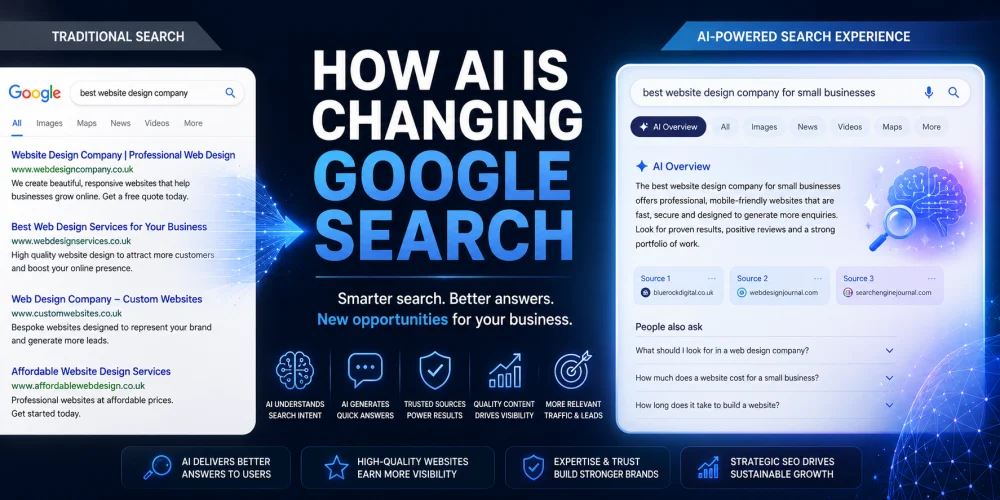
ChatGPT can draw on other sources when it answers questions about you, including your own website. Therefore, the basics of SEO and Generative Engine Optimisation still decide whether you appear at all.
The demand is real. BrightLocal’s 2026 consumer survey found that 45% of US consumers now use ChatGPT or similar tools for local business recommendations. That figure was 6% a year earlier. Meanwhile, Ofcom reports that 54% of UK adults use AI tools.
People still check before they get in touch, though. A later BrightLocal survey, reported by EMARKETER, looked at US consumers who used AI to find a local business. It found that 75% then checked Google or Google Maps before making contact. So your Google Business Profile and your Google reviews remain essential.
Business Agents and adverts: the commercial layer
Business Agents are AI assistants that answer customer questions on behalf of a business, inside ChatGPT. When your business appears in an answer, a user can open your profile and choose to chat with your agent.
The agent works from the product and policy information you provide. For example, it can explain what you sell and link to your website. However, it cannot yet take payments, make bookings or look up an order. OpenAI also labels these chats clearly and keeps them separate from ChatGPT’s own answers.
There is a paid route too. You can pay to promote your agent, so that a ChatGPT advert opens a chat with it. Those adverts are already live in the UK, and OpenAI labels sponsored placements.
Above all, remember that claiming, publishing an agent and advertising are separate decisions. You can claim a profile without doing either of the others, and you do not need an advertising account.
What to expect next from the ChatGPT Business Hub
Expect the hub to grow quickly, because OpenAI describes this launch as “an early step”. It has said that it plans to:
- extend Businesses in ChatGPT and Business Agents to more countries and more types of business
- add features for larger organisations whose set-up is more complicated
- find new ways for businesses and customers to connect, whether directly or through agents
However, OpenAI has not published a timetable. Beyond those stated plans, here is what we expect. These are our predictions, not announcements.
- UK local listings will open. Local shops and restaurants are the obvious gap, although OpenAI has given no date.
- Multi-location tools will follow. Franchises and chains need one place to manage every branch.
- Agents will do more. Today they answer questions. In time, bookings and purchases look like a natural next move.
- Paid options will multiply. Sponsored agents already connect the hub to advertising.
- Rivals will respond. BrightLocal expects other AI platforms to launch similar tools.
Remember that this is a beta, so the details will change. For example, TechCrunch notes that OpenAI retired an earlier in-chat shopping effort in March 2026. Therefore, treat today’s rules as a snapshot.
What UK businesses should do now
Start with the low-cost steps this month, even if you cannot claim a profile yet. That way, your details are right before more customers see them.
- Search for your business. Open Business Hub and check whether a listing already exists.
- Claim with the right account. Use a ChatGPT account that the business owns, not a personal one. Also decide who will complete the ID check.
- Check every detail before you submit. Approval can publish a new profile automatically. Therefore, make sure your legal name and address match your official records, such as Companies House.
- Make your facts consistent. Your name, address, phone number and description should match across your website, Google Business Profile and the main UK citation sites.
- Strengthen the sources ChatGPT reads. Clear service pages, direct answers and recent reviews all help. Our guide on how to appear in AI search results explains this in detail.
- Prepare your products. If you run an online shop, build a clean product feed with accurate prices and stock levels.
- Record a baseline. Note your mentions and clicks once insights appear. Then review them monthly alongside your website analytics.
If you run a local business, steps 4 and 5 are your priority. As a result, you will be ready to claim on the day UK local listings open.
You can also hand over the day-to-day work. The hub lets the person who claimed the business give an agency access, so you keep ownership while a specialist manages the profile.
ChatGPT Business Hub FAQs
Is the ChatGPT Business Hub free?
OpenAI’s guidance lists no fee for claiming or managing a profile. You also do not need an advertising account or an enterprise agreement. Sponsoring a Business Agent through ChatGPT Ads is the paid option.
Will claiming a profile make ChatGPT recommend my business?
No, not by itself. Claiming lets you correct and manage your own information. However, ChatGPT still decides independently which businesses to recommend.
Can a UK shop, restaurant or tradesperson claim a listing?
Not as a local listing yet, because those are limited to existing US listings. However, UK eCommerce and online service businesses can now claim a profile.
Can I see what people ask ChatGPT about my business?
No. You see totals and broad themes, not individual questions or conversations. The same applies to chats with your own Business Agent.
What if someone else has claimed my business?
Open the profile in ChatGPT and choose the option to dispute ownership. You will then verify through Persona that you are authorised to represent the business.
The bottom line
The ChatGPT Business Hub gives a business three things: a verified profile, control over its details and first-party data on AI visibility. For UK eCommerce and online service businesses, it is worth claiming now. For local businesses, it is worth preparing for.
However, the hub rewards businesses that already have strong foundations. Accurate information, a clear website and a solid reputation still decide who gets recommended.
At Blue Rock Digital, we help UK businesses build that visibility through our SEO services and AI visibility services. To see how your business appears in ChatGPT today, request a free AI Visibility Check or call us on 0800 433 7815.