


ChatGPT Deep Research is an AI-powered research tool that can autonomously search the web, analyse multiple sources, and produce detailed research reports in minutes. It is one of the most significant developments in AI-assisted research to date.
This post explains what ChatGPT Deep Research does, how it works, and what it means for businesses, marketers, and researchers.
What is the ChatGPT Deep Research Agent?
The new agent is an advanced version of the original ChatGPT model, enhanced with deep learning capabilities tailored for in-depth research. You can read more on the OpenAI Deep Research announcement page. This agent uses vast data, including academic papers, articles, books, and more, to provide detailed, fact-based responses to specific queries. It has a unique ability to respond to questions and analyse and synthesise information from multiple sources to provide comprehensive answers, much like a human researcher would do.
Unlike its predecessors, which were more geared toward casual conversation and light information retrieval, the ChatGPT Deep Research Agent can dive into complex topics, pulling together disparate pieces of information to create a cohesive and well-supported response. This makes it an invaluable tool for students, researchers, business professionals, and anyone needing accurate, detailed information.

Key Features of the ChatGPT Deep Research Agent
The ChatGPT Deep Research Agent offers many features that stand out from traditional search engines and AI models. Some of the key features include:
1. Advanced Information Retrieval
Traditional search engines often provide users with links to websites that may or may not contain the exact information they are looking for. In contrast, the ChatGPT Deep Research Agent goes beyond just showing results. It uses advanced natural language processing (NLP) techniques to understand the context of a query and retrieve relevant information from a vast database of sources. This enables it to answer questions precisely, drawing on various authoritative sources.
2. Synthesis of Complex Information
One of the standout features is its ability to synthesise information from multiple sources. Instead of simply regurgitating answers, it analyses various perspectives and compiles them into a well-rounded response. For example, ChatGPT will pull from research papers, textbooks, and articles to present a detailed, cohesive explanation if asked about a complex scientific concept.
3. Citation and Source Verification
With the rise of misinformation, it’s crucial to ensure that the sources of information are credible. The ChatGPT Deep Research Agent addresses this by providing answers and citing relevant sources. It can refer to academic papers, peer-reviewed articles, and other reliable references, making it easier for users to verify the information they receive.
4. Contextual Understanding
Unlike earlier versions of ChatGPT, the Deep Research Agent has a significantly improved understanding of context. It can comprehend long, multi-part questions, keeping track of previous queries and providing answers that build upon prior information. This makes it especially useful for ongoing research projects where new questions arise from previous ones.
5. Customisable Research Parameters
In many cases, researchers or business professionals may need to focus on specific types of information, such as industry reports, scientific studies, or market trends. The ChatGPT Agent allows users to customise their queries, enabling the AI to focus on the task’s most relevant sources or data types. This customisation feature enhances the precision of the results, making it easier to obtain the exact information needed.
How the ChatGPT Deep Research Agent Enhances Productivity
This new tool significantly enhances productivity in various fields by automating time-consuming research tasks. Here are some ways it can benefit different sectors:
1. Academic Research
The ChatGPT Deep Research Agent is a game-changer for students, researchers, and academics. Traditionally, academic research involves hours of reading papers, books, and articles, then synthesising the information to produce a research paper or thesis. With the ChatGPT Deep Research Agent, much of this work can be automated. Users can get a well-rounded view of a subject and citations to back up the information by asking specific questions or requesting summaries of key topics. This saves time and allows researchers to focus on analysis and critical thinking rather than spending hours on information retrieval.
2. Business Intelligence
Staying up-to-date with industry trends, competitor analysis, and market research is essential in business. ChatGPT can assist by quickly gathering data from various sources, including news outlets, research reports, and industry blogs. By setting custom parameters, companies can focus on specific sectors, emerging trends, or competitor activity, enabling them to make more informed decisions without sifting through mountains of data.
3. Content Creation
Content marketers and writers can use AI to generate ideas, research topics, and draft articles. Writers can request a detailed subject analysis to gather insights and structure their articles more effectively. This can speed up the content creation while ensuring the information is accurate and well-researched.
4. Legal and Compliance Research
Staying compliant with laws and regulations is a significant challenge in legal fields. The ChatGPT Deep Research Agent can help professionals quickly retrieve up-to-date legal precedents, case studies, and relevant regulations. This speeds up legal research and ensures that the information is accurate and applicable to specific cases.
5. Customer Support and FAQ Creation
Businesses can use the ChatGPT Deep Research Agent to create comprehensive web FAQs, ensuring customers can access the most accurate and up-to-date information. Companies can streamline their customer support processes and reduce response times by asking the agent to generate answers based on existing knowledge and user queries.
The Future of Research with ChatGPT Deep Research Agent
The ChatGPT Deep Research Agent will only become more advanced as AI evolves. It will be able to handle more complex queries, offer even deeper insights, and provide even more personalised answers. Additionally, as AI models continue to learn from a vast pool of data, their ability to discern nuances, understand context, and synthesise information will become even more refined.
1. AI and the Integration of Other Data Sources
Future ChatGPT Deep Research Agent versions could integrate more data types, such as multimedia content (videos, podcasts, etc.) or live data feeds. This would enhance the AI’s ability to deliver real-time information, especially for industries that rely on up-to-the-minute developments, such as finance or healthcare.
2. Improved Personalisation
AI is moving towards greater personalisation. In the future, the ChatGPT Deep Research Agent could better understand each user’s unique needs and preferences. This would allow the agent to tailor its responses more effectively, providing highly relevant information to the user’s research interests.
3. Integration with Other AI Tools
The potential for integration with other AI tools could make this even more powerful. Imagine an AI research assistant that can work in tandem with tools for data analysis, statistical modelling, and other advanced applications. Such integrations could streamline workflows and provide more comprehensive insights.
4. Collaboration with Human Experts
While AI is mighty, human expertise is still invaluable. Future research could involve seamless collaboration between the ChatGPT Deep Research Agent and human researchers. The AI would handle data gathering, summarisation, and initial analysis, while human researchers would add critical thinking, interpretation, and final decision-making.
ChatGPT Deep Research Agent: Bridging AI and Human Expertise for Faster, Smarter Research
This is a breakthrough in AI, offering immense potential for improving the speed and accuracy of research across a wide range of industries. Whether for academic research, business intelligence, content creation, or legal research, this powerful AI tool is designed to help users access, analyse, and synthesise information more efficiently.
As AI advances, the agent will likely become an indispensable tool for professionals in all sectors. It will drive productivity, improve decision-making, and enable faster, more accurate research. By incorporating AI-driven research into their workflows, users can stay ahead of the competition and ensure they have the knowledge they need to succeed in today’s fast-paced digital world.
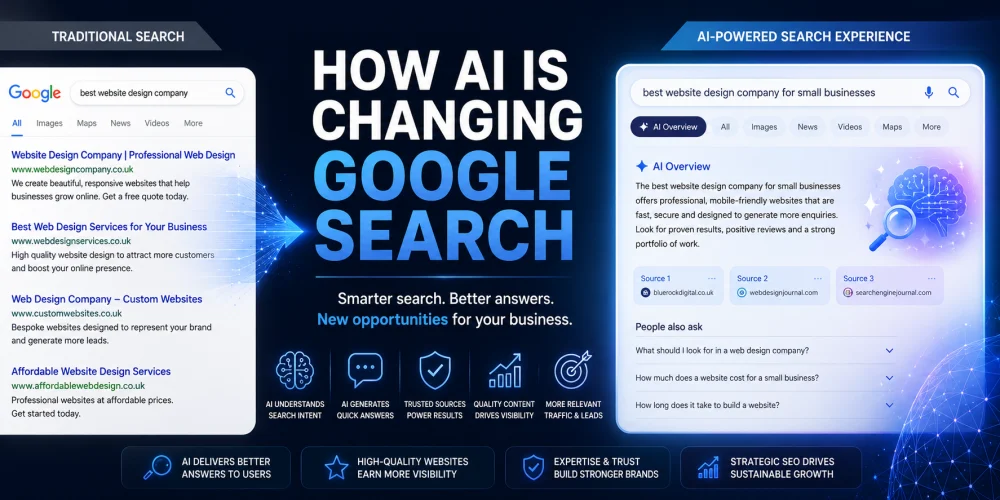
For businesses and marketers, the rise of AI research tools underscores the importance of Generative Engine Optimisation — structuring your content so that AI systems can find, understand, and cite it. This shift is already reshaping traditional search behaviour, as explored in our guide on how AI is affecting Google searches. One practical step businesses can take is implementing an llms.txt file, which gives large language models structured information about your business and services.
If you want your business to be visible to AI-powered tools, start by reading our introduction to what GEO is and why your business needs it, and follow up with our practical guide to optimising your website for AI search engines.
With its current capabilities and the promise of future improvements, this is a must-have tool for anyone looking to gain a deeper understanding of their field and make more informed, data-driven decisions.