

The launch of Google Maps AI Ask Maps represents one of the most significant changes to local search in years. Google is transforming Maps from a simple navigation tool into a powerful AI assistant powered by its Gemini large language model.
Instead of typing short keyword searches such as “restaurant near me”, users can now ask complex conversational questions directly inside Google Maps. The AI then analyses large datasets about local businesses and produces intelligent recommendations.
For businesses that rely on local visibility, this development is extremely important. Google Maps already accounts for a large share of discovery traffic for local services, hospitality venues, and retail locations. With AI now automatically selecting and recommending businesses, the way customers find local services is changing rapidly.
In this guide, we explain:
- What the Google Maps AI Ask Maps feature is
- How Gemini powers the new search experience
- How the AI chooses which businesses to recommend
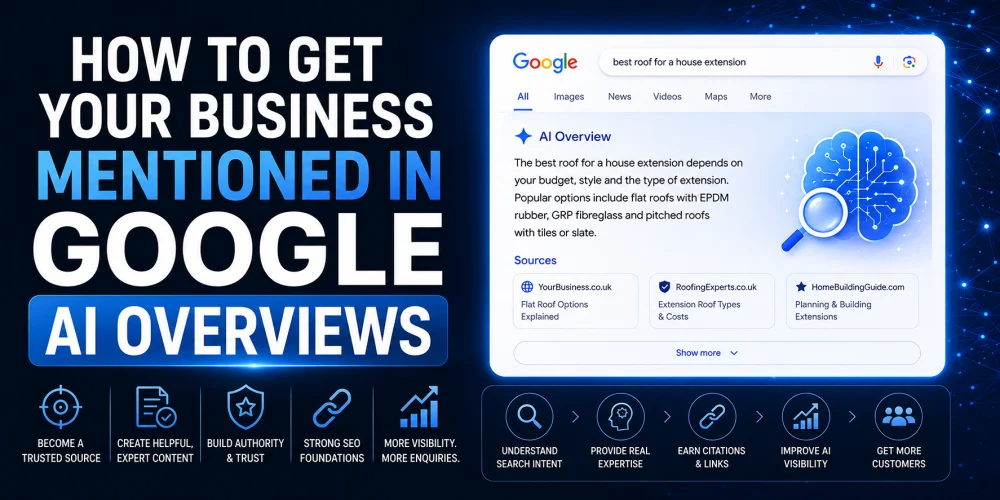
- What businesses must do now to remain visible in AI search
Understanding these changes early can give businesses a major advantage as Google continues integrating artificial intelligence into search and discovery.
What Is Google Maps AI Ask Maps?
Google Maps AI Ask Maps is a conversational search feature built directly into the Google Maps application. It allows users to ask natural language questions rather than typing short keyword queries.
For example, instead of searching:
- “coffee shop near me”
A user could ask:
- “Find a quiet café nearby where I can work for a few hours.”
The AI analyses the question and provides recommendations that match the request.
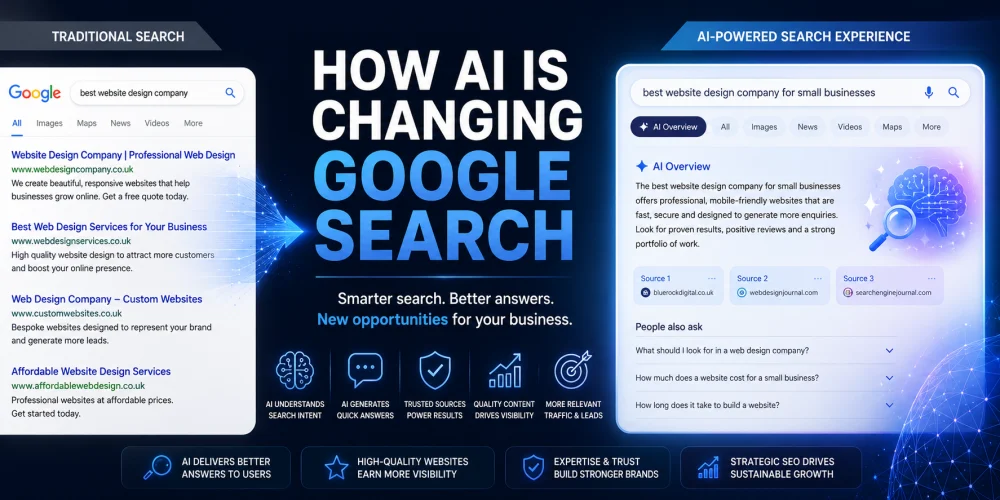
This shift changes the search process from keyword matching to intent understanding.
In traditional search systems, results were largely determined by keywords, distance, and ranking signals. However, with Ask Maps, Google’s AI interprets the meaning behind the question and then identifies businesses that best match the request.
As a result, the search experience becomes far more conversational and personalised.
How Gemini Powers the Google Maps AI Experience
The Ask Maps feature is powered by Google Gemini, Google’s advanced large language model.
Gemini works similarly to other generative AI systems. It analyses large amounts of data and produces structured responses that summarise relevant information.
Within Google Maps, Gemini processes information from multiple sources simultaneously.
These include:
- Google Business Profiles
- User reviews
- Photos uploaded by customers
- Website content
- Local guides contributions
- Business attributes
- Opening hours and services
- Location data and mapping systems
The AI then evaluates which businesses best match the user’s question.
For example, if someone asks:
“Which cafés nearby have outdoor seating and good Wi-Fi?”
Gemini may examine:
- reviews mentioning outdoor seating
- photos showing terrace seating
- attributes indicating Wi-Fi availability
- opening hours
- ratings and popularity
The system then recommends locations that match those conditions.
This means the AI is effectively interpreting evidence from multiple sources before presenting a recommendation.
Google has explained the broader vision of AI search and Gemini integration on its developer platform, which outlines how AI models can be grounded using Maps data to produce location-aware responses.
Why Google Maps AI Ask Maps Changes Local Search
For many years, local search followed a simple structure.
Users searched for a service, Google displayed a list of businesses, and the user selected one.
However, AI is now changing that process.
Instead of browsing lists of results, users increasingly receive direct recommendations generated by AI systems.
This means the decision-making process is shifting.
Previously, the process looked like this:
Search → View local listings → Compare options → Choose a business
With AI search, the process becomes much simpler:
Ask a question → AI provides recommendations → User selects a result
This change has significant implications for businesses.
Instead of competing only for rankings, businesses must now compete to be selected by the AI itself.
How the Ask Maps Feature Works in Practice
The Ask Maps system is designed to handle a wide range of natural language queries.
Users can ask questions about:
- nearby services
- specific facilities
- types of businesses
- travel planning
- local recommendations
Because Gemini supports conversational follow-ups, users can refine their requests.
For example:
User:
“Find a café nearby.”
Follow-up:
“Which one has the best reviews?”
Follow-up:
“Plan a walking route to it.”
The AI responds to each stage of the conversation and adapts its recommendations accordingly.
This interaction is very similar to how users interact with AI chat assistants.
The key difference is that the responses are grounded in real-world location data.
Examples of Questions Users Can Ask Maps AI
The flexibility of Ask Maps allows people to ask highly specific questions.
Examples include:
- “Which restaurants nearby have vegetarian options?”
- “Find a good breakfast spot open before 7 am.”
- “Where can I park near the stadium?”
- “Which cafés are quiet enough to work from?”
- “Plan a scenic drive with places to stop for lunch.”
In many cases, the AI will generate a list of suggested locations along with explanations.
These explanations may reference:
- reviews
- ratings
- photos
- business features
- proximity
This is very different from the traditional search experience, where results appeared primarily as a list of map pins.
The Data Signals That Influence AI Recommendations
Understanding how AI chooses recommendations is critical for businesses.
Although Google has not publicly revealed every ranking factor used by Ask Maps, early analysis suggests that several signals are extremely important.
These signals are likely similar to those already used in local search but interpreted in a new way by AI.
Key signals include:
Google Business Profile data
Business profiles remain one of the most important sources of information.
Important fields include:
- business categories
- services offered
- opening hours
- attributes
- business descriptions
Profiles that contain detailed and accurate information provide stronger signals for the AI.
Reviews and customer feedback
Reviews play a major role in AI interpretation.
Gemini can analyse reviews to understand what customers say about a business.
For example, the AI may detect phrases such as:
- “quiet café”
- “great outdoor seating”
- “friendly staff”
- “fast service”
These phrases help the AI match businesses with user queries.
Photos and visual content
Images also provide valuable context.
Photos uploaded to Google Maps can show:
- seating areas
- parking facilities
- menu boards
- interior layout
- exterior signage
Visual content helps the AI confirm whether a business offers certain features.
Website information
The AI can also examine information from the business website.
Service pages, FAQs, and structured data help reinforce what a business does and where it operates.
This is one reason why strong website content still plays a vital role in local SEO.
How AI Search Is Changing Local SEO
Local SEO has always been focused on improving visibility in Google Maps and search results.
However, AI is changing the way visibility works.
Previously, optimisation focused on ranking factors such as:
- proximity
- keywords
- backlinks
- citations
- Google reviews
These factors still matter. However, AI introduces a new layer of analysis.
Instead of simply ranking pages, the AI interprets information about businesses and then selects those that best match a question.
This means businesses must now optimise for AI interpretation as well as traditional search rankings.
The concept behind this approach is often referred to as Generative Engine Optimisation (GEO).
GEO focuses on ensuring that AI systems understand a business clearly enough to recommend it.
Google’s broader strategy around AI search can be explored in its official search documentation.
Why Google Business Profile Optimisation Is More Important Than Ever
The Google Business Profile is now a primary source of information for AI recommendations.
Businesses should ensure their profile is fully optimised.
Important steps include:
Selecting the correct categories
Categories help Google understand what services a business offers.
Choosing the correct primary category is particularly important.
Listing services clearly
Service descriptions should be detailed and accurate.
For example, a cleaning company might list:
- roof cleaning
- driveway cleaning
- gutter cleaning
- render cleaning
This helps the AI understand exactly what the business does.
Adding attributes
Attributes provide additional signals about the business.
These may include:
- wheelchair accessibility
- outdoor seating
- free Wi-Fi
- appointment requirements
Uploading high-quality photos
Images improve credibility and provide additional context.
Businesses should regularly upload photos showing:
- completed work
- premises
- equipment
- team members
The Growing Importance of Reviews in AI Local Search
Customer reviews have always influenced local rankings.
However, AI now analyses reviews more deeply.
Instead of simply counting reviews, Gemini examines what customers actually say.
This means review content is extremely valuable.
Encouraging customers to mention specific services can help the AI understand the business better.
For example:
Instead of a vague review, such as:
“Great service.”
A more useful review might say:
“Excellent patio cleaning service. The driveway looks brand new.”
These details help the AI match businesses with relevant searches.
Why Website Content Still Matters for AI Maps
Some businesses assume that Google Maps visibility depends only on their Business Profile.
However, the business website also plays an important role.
The website helps reinforce:
- the services offered
- the areas served
- the expertise of the business
High-quality content improves trust signals and helps search engines understand the business more clearly.
Examples of helpful website content include:
- service pages
- location pages
- FAQs
- case studies
- blog articles
For example, businesses can strengthen their authority with pages such as:
- roof cleaning services
- driveway cleaning services
- render cleaning services
These pages help Google connect the business with relevant searches.
How AI Maps Could Change Customer Behaviour
The introduction of AI recommendations will likely change how customers discover businesses.
Instead of browsing multiple listings, users may simply follow the AI’s recommendation.
This could significantly reduce the number of businesses that receive visibility.
Businesses that are not recommended by the AI may receive less traffic even if they previously ranked well in search results.
However, businesses that are recommended frequently may see increased visibility and higher enquiry rates.
This means that AI optimisation may become a key part of digital marketing strategies.
The Future of AI Search in Google Maps
The Ask Maps feature is only the beginning.
Google is gradually integrating Gemini across its entire ecosystem.
Future developments may include:
- voice-activated Maps assistants
- AI trip planning
- personalised travel recommendations
- AI navigation assistance
- deeper integration with Google Search
As these features evolve, AI will play an even greater role in how people discover businesses and locations.
Businesses that adapt early will be better positioned to benefit from these changes.
What Should Businesses Do Next?
The arrival of Google Maps AI Ask Maps signals a major shift in how local discovery works.
Businesses that want to remain visible should take several practical steps.
These include:
- fully optimising their Google Business Profile
- encouraging detailed customer reviews
- maintaining accurate business information
- uploading high-quality images
- improving website content and authority
Equally important is understanding how AI systems interpret business information.
Businesses that build strong digital signals across their website, Google profile, and online presence are more likely to be recommended by AI systems.
As Google continues expanding Gemini across search and Maps, local discovery will become increasingly AI-driven.
For businesses that rely on local customers, preparing for this shift now can provide a significant competitive advantage.