



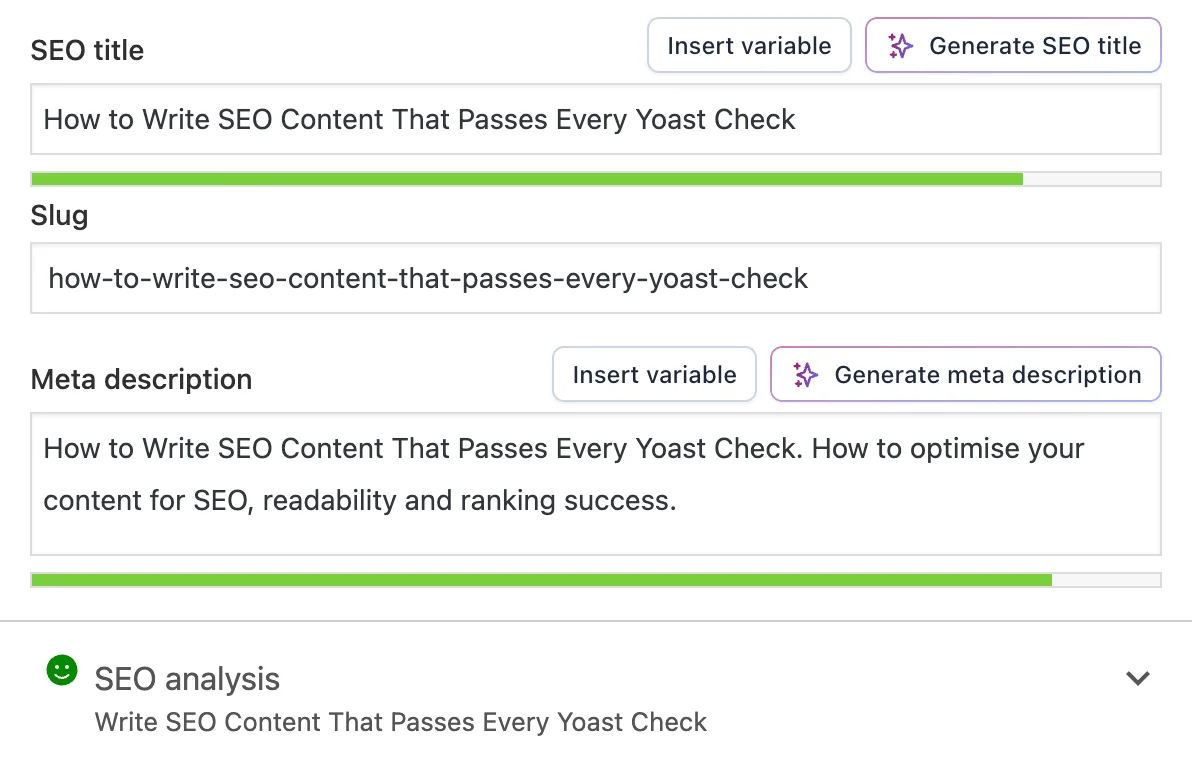
Writing SEO content that passes Yoast checks is about more than ticking green lights. The checks exist to enforce good habits: a clear focus keyphrase, sufficient length, readable sentences, and a logical structure. Get these right and you are writing content that both readers and search engines will value.
This guide covers each Yoast SEO and readability check and explains how to pass them without compromising the quality of your writing.
Why Learning to Write SEO Content for Yoast Still Matters in 2026
Despite many SEO plugins entering the market, Yoast remains the most widely used content optimisation tool for WordPress users. Its checks reflect modern search-engine expectations, especially regarding structure, clarity and overall user experience. Because Yoast is built around principles that Google already values, its recommendations offer practical, reliable guidance for improving content performance.
Why Yoast Continues to Influence Ranking Outcomes
Search engines use a mixture of semantic understanding, user behaviour signals and content structure to determine which pages deserve higher visibility. Yoast’s checklist aligns with these factors by ensuring a correct heading hierarchy, strong introductions, readable paragraphs, and relevant placement of keyphrases. Each of these influences how search engines interpret and prioritise your content. Alongside on-page content, your title tags and meta descriptions also need to be well optimised to maximise click-through rates.
Additionally, user behaviour metrics such as dwell time and scroll depth matter more than ever. When content is easy to read and flows naturally, users stay longer on the page. Yoast’s readability checks support this by reducing sentence complexity, improving transitions and breaking long blocks into digestible chunks.
How Yoast Helps Structure Better Content Planning
Writers often dive into drafting without considering how search engines read their work. Yoast encourages a more strategic approach, prompting writers to plan headings before writing, choose suitable synonyms, structure information logically and apply internal links early. This results in more consistent, higher-performing articles across your website.
How to Use Focus Keyphrases Correctly to Pass Yoast SEO Checks
Keyphrase optimisation remains central to Yoast’s scoring system. Although Google now understands keywords more flexibly than in the past, clearly signalling your primary topic helps both users and algorithms understand your intent.
Using the Focus Keyphrase in the Introduction
Yoast requires the exact focus keyphrase to appear once in the opening paragraph. This confirms the theme instantly and helps readers recognise they are in the right place. Placement must feel natural and never forced.
Maintaining Correct Keyphrase Density Without Over-Optimising
Keyphrase stuffing harms readability and ranking potential. Yoast recommends a density between approximately 0.75% and 1%, depending on article length. This ensures your phrase appears naturally, without detracting from the overall flow. Synonyms and related terms help diversify your wording while keeping your topic consistent.
Including Keyphrases and Synonyms in Headings
One H2 must include the exact focus keyphrase. Additional headings should use alternatives like “SEO content writing”, “Yoast SEO optimisation”, or “content optimisation methods”. This strengthens your content hierarchy and helps Yoast understand the structure.
Structuring Heading Hierarchy for Yoast and Search Engines
Effective heading hierarchy is one of the most important elements of SEO writing. Google reads headings to understand the relationship between topics, and Yoast checks them carefully to ensure clarity.
Planning Effective H2 Headings
H2 headings represent the major themes of the article. They should align with real user questions, search intent and the logical order of information. For example, a guide about writing SEO content must discuss keyphrases, readability, headings, images and linking practices.
Using H3 Headings for Clarity and Granularity
H3 subheadings allow you to divide detailed sections into smaller parts. This supports scannability, improves readability and helps Yoast measure heading distribution. Readers benefit as they can quickly locate specific information.
Avoiding Weak or Meaningless Headings
Generic headings such as “Conclusion,” “Final Thoughts,” or “Summary” weaken the page’s structural value. Yoast favours descriptive headings that mirror user intent, such as “What Should Content Creators Do Next?” or “Why This Strategy Improves SEO Results”.
How Readability Influences Yoast Scores and User Engagement
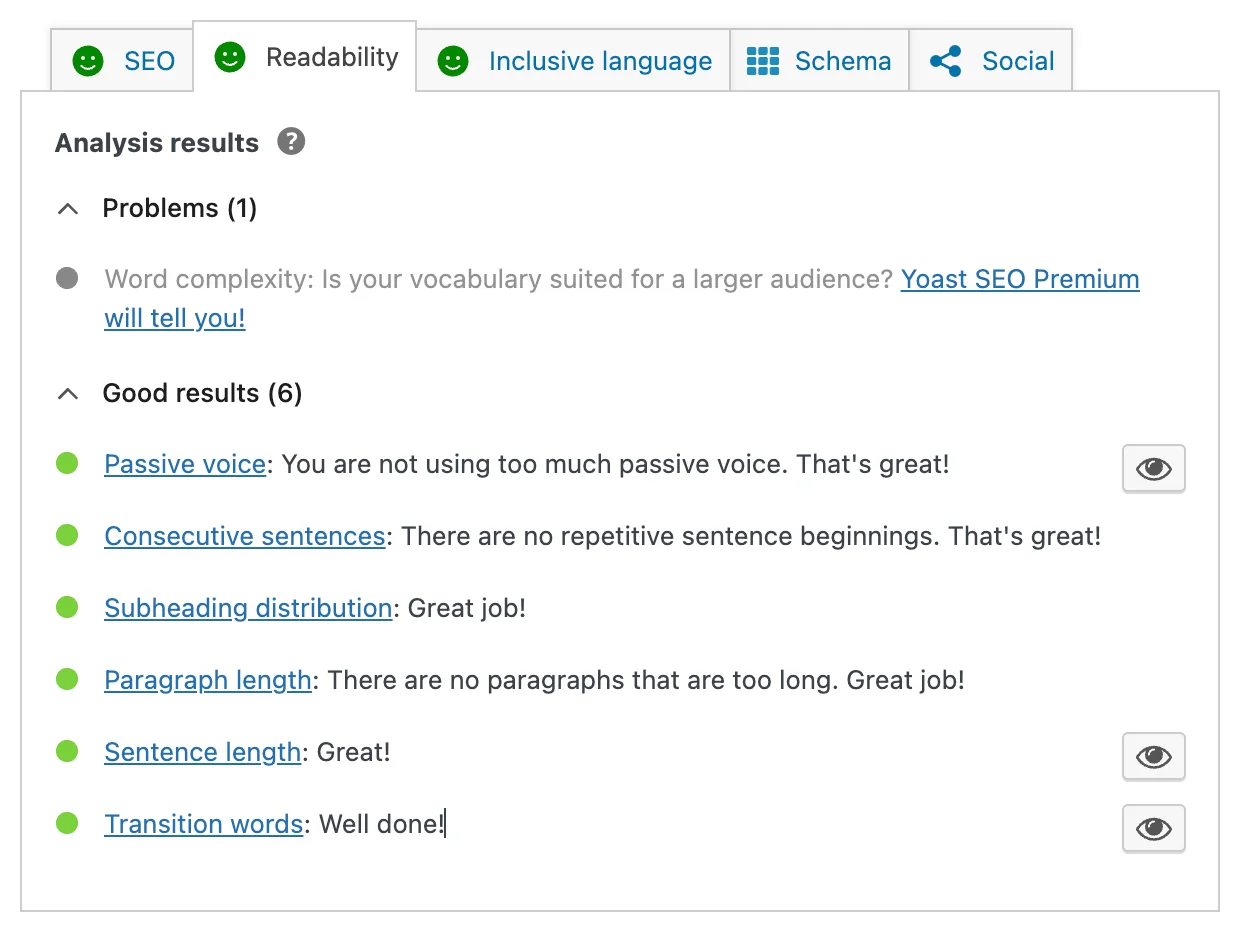
Yoast’s readability tools highlight issues known to affect user experience. When readability improves, reader retention increases, which can support ranking improvements.
Keeping Sentences Short and Easy to Read
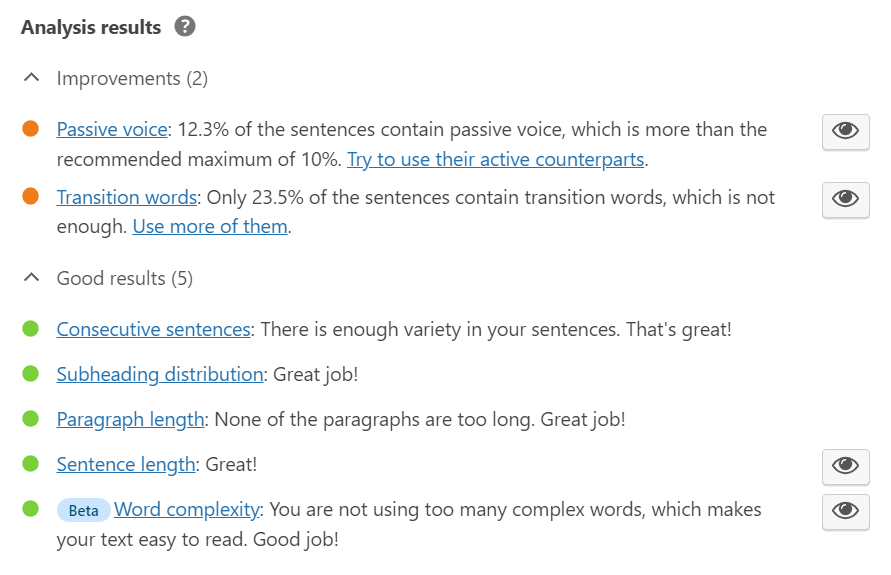
Yoast encourages sentences to stay under 20 words wherever possible. Short sentences improve mobile readability and prevent reader fatigue. When long sentences appear, they should be meaningful, not unnecessary.
Maintaining Short Paragraphs for Better Comprehension
Paragraphs should remain between three and five lines. This prevents overwhelming blocks of text that users often skip. Scannability is essential, especially for mobile readers.
Using Transition Words to Improve Article Flow
Transition words connect ideas and support natural reading patterns. Words such as “Furthermore”, “However”, “As a result”, and “Meanwhile” help create a logical progression throughout the article. Yoast requires at least 30% of sentences to include them, which enhances clarity and flow.
Managing Passive Voice to Pass Yoast Readability Checks
Although passive voice can be useful in some contexts, excessive use makes writing feel unclear or indirect. Yoast highlights passive constructions and encourages writers to rephrase them.
Identifying When Passive Voice Appears
Passive voice often appears when explaining processes. While not always wrong, it slows down the pace and reduces clarity. Recognising passive structures helps writers adjust quickly.
Rewriting Sentences Using Active Voice
Simple tweaks can transform passive sentences. For example, “The content was reviewed by our team” becomes “Our team reviewed the content.” Active voice improves readability, strengthens the narrative and enhances user engagement.
Optimising Images for SEO and Passing Yoast Checks
Images are essential for breaking up long-form content. Yoast checks for alt text quality, placement and relevance.
Writing Strong Alt Text for Accessibility and SEO
Alt text should clearly describe the image. Only one image in the entire post should include the exact keyphrase. All other alt texts may use synonyms or straightforward descriptions without optimisation. This ensures natural usage.
Placing Images Consistently for Better Readability
You should add an image every 300–400 words to support engagement. Each image must relate meaningfully to the text rather than serve as decoration. This maintains visual interest across long articles.
Naming Image Files Correctly Before Uploading
Image file names should follow SEO-friendly practices:
yoast-seo-content-optimisation-guide.jpg
Clear file names support search engine indexing and improve contextual relevance.
Strengthening SEO with Internal Linking That Yoast Rewards
Internal linking connects your blog posts, distributes authority across your website and improves navigation. Yoast requires at least one internal link to support on-page SEO.
Linking to Relevant Service Pages
For this blog, suitable internal links for Blue Rock Digital might include:
- SEO Services Page
- Content Writing Packages Page
- Web Design Services Page
These links enhance topical authority whilst helping users find related information.
Choosing Appropriate Anchor Text for Each Link
Anchor text should describe the target page accurately. For example, “professional SEO content writing services” offers more value than “click here”. Descriptive anchors improve context and semantic relevance.
Building an Internal Linking System That Scales
When websites grow, linking becomes more important. Creating clusters of related content helps Google understand which topics you specialise in, improving sitewide ranking potential.
Why Outbound Links Improve Credibility and Support Yoast SEO Checks
Outbound links strengthen your content’s authority by linking to trustworthy sources. Yoast encourages adding them when appropriate.
Choosing High-Authority External Sources
Good external sources include:
- Search Engine Journal
- Search Engine Land
- Google Search Central
- Yoast’s own knowledge base (https://yoast.com/)
These links provide validation for your claims and enhance user trust.
How Outbound Links Improve the Reader Experience
Linking to reputable resources gives readers access to deeper information. This improves user satisfaction and encourages engagement, indirectly supporting SEO performance.
What Content Creators Should Do Next to Improve Their SEO Writing
Writers must treat Yoast as a guide, not a rulebook. For a broader overview of effective blog writing, see our guide on how to write blog posts for SEO. While Yoast helps structure content effectively, the real goal is to produce helpful, valuable writing that engages readers and solves their problems. Using Yoast correctly ensures your content performs well in both areas.
Businesses that want to scale content production benefit from consistently following Yoast’s framework. When paired with professional research and strategic planning, this approach results in stronger rankings, improved authority and better user experience. If you need support writing SEO-optimised content or improving your website’s overall structure, Blue Rock Digital can provide targeted help.
Frequently Asked Questions About Writing Content for Yoast SEO
Do I need to get every Yoast light green for my content to rank?
No. Yoast is a very useful guide, but it is not a ranking engine. You should aim for mostly green lights on SEO and readability, but focus first on answering search intent and creating genuinely useful content. It is better to have slightly imperfect Yoast scores than over-optimised, unnatural writing.
How long should an SEO blog post be to satisfy Yoast?
Yoast recommends at least 300 words, but for competitive topics, a much longer word count is usually more effective. For in-depth guides, aiming for 2,000–2,500+ words allows you to cover related questions, add examples and build topical authority while still meeting readability targets.
How often should I use my focus keyphrase to keep Yoast happy?
You only need to use the focus keyphrase enough times to make the topic clear. Yoast’s keyphrase density guidance is a good benchmark, but avoid repeating the exact phrase in every sentence or heading. Mix in natural synonyms and related terms to avoid keyword stuffing.
Does Yoast SEO replace a proper content strategy?
No. Yoast provides guardrails for individual pages, but it does not plan your content calendar, map topics to user journeys, or build authority across your site. It works best when paired with a clear content strategy, strong keyword research and high-quality writing. Our SEO services include exactly this combination.
What is the biggest mistake people make when writing for Yoast?
The most common mistake is writing for the plugin instead of the reader. This often leads to awkward phrasing, forced keyphrases and bloated content. The best approach is to write clearly for humans first, then use Yoast to tidy up structure, headings, links and readability.