


Voice search is growing rapidly and changing how people find local businesses, services, and information online. Queries made by voice are longer, more conversational, and more often phrased as questions than typed searches.
This guide explains why voice search matters for SEO in 2025 and what you can do to make your website more visible in voice search results.
The Rise of Voice Search and Why It Matters
How Voice Search Is Changing User Behaviour
With tools like Siri, Alexa, and Google Assistant, voice search has shifted how users interact with search. Google’s Speakable structured data is one way to signal voice-friendly content. With tools like Siri, Alexa, and Google Assistant, voice search has shifted how users interact with search engines. Instead of short, typed queries, people now ask full, natural questions.
- “Where’s the nearest Italian restaurant?”
- “How do I fix a leaking tap?”
- “What time does the local DIY store close?”
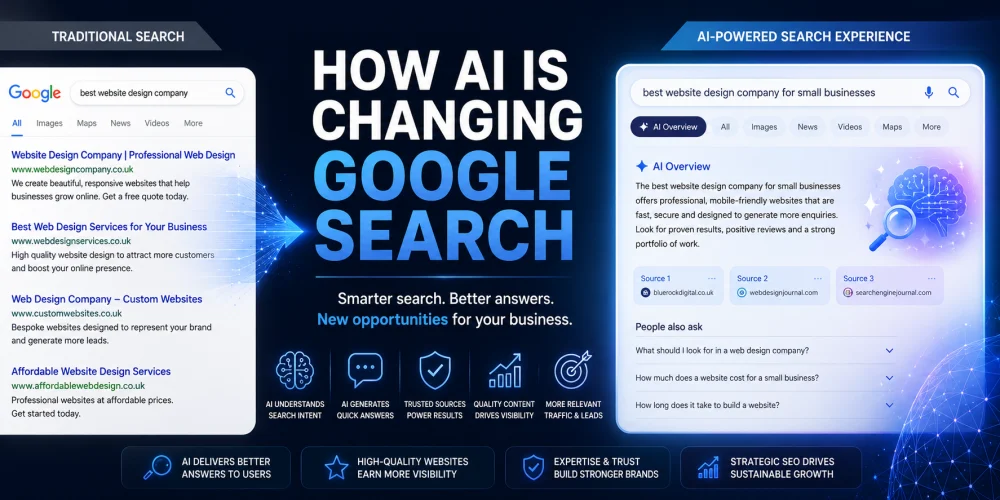
This change means your content and SEO strategies must adapt to match these conversational patterns. AI is also reshaping how search engines process these queries; read our guide on how AI is affecting Google searches for a wider view of what is changing.
Why Your SEO Strategy Needs to Evolve
In 2025, voice search is expected to account for a large share of online queries. If your website isn’t optimised for voice search, you could miss out on valuable traffic, especially local customers ready to take action. If you are new to search optimisation, our guide on what SEO is and how it works covers the fundamentals.
How Voice Search Affects SEO
Voice Search and Organic Results
Unlike traditional search results, voice search often delivers just one result. This means virtual assistants choose only the most relevant, well-structured content. Winning that spot can drive significant traffic and authority to your site.
Voice Search and Local SEO
Many voice searches are location-based. When users ask, “Where can I find a plumber near me?”, Google considers your Google Business Profile, website content, and reviews. Local optimisation is crucial for capturing these opportunities.
SEO Strategies for Voice Search
1. Focus on Long-Tail and Conversational Keywords
Traditional SEO focused on short, snappy phrases. Voice search, however, relies on natural, full-sentence queries. These are called long-tail keywords.
How to Use Long-Tail Keywords:
- Think like your customer: “How do I unclog a sink without chemicals?”
- Use tools like Answer the Public or Google’s ‘People also ask’ box.
- Optimise headings and meta descriptions to reflect these phrases.
Tip: Use natural language that matches how people speak, not how they type.
2. Create Content That Answers Specific Questions
Voice search users want answers fast. Structuring your content around questions and answers can help your site become the featured response (often called position zero).
Best Practices:
- Build a comprehensive FAQ section.
- Use clear headings like “What is the best time to water plants?”
- Write concise, informative answers- about 30-50 words is ideal.
3. Optimise for Local Voice Queries
Over 50% of voice searches are local. That means optimising your site for “near me” searches and geographic intent is key.
Steps to Optimise for Local:
- Complete your Google Business Profile.
- Add your NAP (Name, Address, Phone number) to every page.
- Create location-specific content on your blog.
- Use schema markup to add local business data.
Web Design Optimisation for Voice SEO
Voice search isn’t just about content. Your site’s design and structure also impact its performance in voice results.
1. Mobile-First, Responsive Design
Most voice searches happen on mobile devices. If your site doesn’t load well or is hard to navigate on a phone, users-and Google-will move on.
Tips:
- Use responsive design frameworks.
- Keep forms and buttons easy to tap.
- Prioritise fast loading and minimal pop-ups.
2. Improve Page Speed and Performance
Voice search users want fast results. Google rewards pages that load quickly, especially on mobile.
Optimisation Tactics:
- Compress images.
- Use lazy loading.
- Minimise CSS and JavaScript files.
- Choose reliable hosting.
3. Voice-Activated Interfaces (Optional)
For advanced UX, some businesses now integrate voice UI features on their site, such as voice-activated search bars. While not essential, this can improve accessibility and user engagement.
Technical SEO for Voice Search
Beyond user experience, your site’s technical structure plays a big role in how it’s indexed and chosen for voice queries.
1. Implement Structured Data (Schema Markup)
Structured data helps search engines understand your site’s content and makes it eligible for rich results, such as featured snippets.
Key Markup Types for Voice SEO:
- FAQ schema
- Local business schema
- Product schema
- Review schema
Use Google’s Structured Data Markup Helper or Schema.org for guidance.
2. Ensure Accessibility and Clear Navigation
Search engines favour accessible websites. Ensure your site is easy to navigate, with clear headings, readable text, and logical structure.
Consider:
- ARIA labels and semantic HTML
- Alt text for images
- Clear, consistent page hierarchy (H1-H6)
- Internal links between relevant pages
Tools to Help Optimise for Voice Search
There are several tools that can help you implement and track voice search SEO efforts:
Voice SEO Tools to Try
- Google Search Console – Monitor search queries and performance
- Answer the Public – Find voice-friendly question keywords
- SEMrush / Ahrefs – Discover long-tail keyword opportunities
- Whitespark / BrightLocal – Manage local citations and listings
- PageSpeed Insights – Improve loading speed
Real-World Results from Voice SEO
Companies that have already shifted toward voice search SEO are seeing tangible benefits.
Example 1: Voice-Driven Content Strategy
One marketing agency added conversational blog content like:
- “How to find a reliable plumber in Birmingham”
- “What should I look for in a wedding photographer?”
Their organic traffic increased 35% in four months, with many top keywords reflecting voice-style queries.
Example 2: Local Business Optimisation
A small café updated its Google Business Profile, improved local schema markup, and wrote FAQ-style pages. Within 60 days, their “near me” visibility tripled, and voice search traffic became a leading source of visits.
How Voice Search Affects Conversions
Voice searches are often bottom-of-funnel, meaning users are close to taking action. Optimising for voice search means you’re targeting high-intent users who are ready to:
- Make a purchase
- Call your business
- Visit your location
- Book a service
By appearing in these queries, you can drive more qualified traffic and boost conversion rates.
Frequently Asked Questions About Voice SEO
Is voice search worth focusing on in 2025?
Absolutely. Voice search usage grows yearly and is crucial in mobile and local SEO.
Does voice search affect all types of businesses?
While local and service-based businesses benefit the most, every brand can improve visibility by answering common questions through content.
What’s the best way to start with voice search SEO?
Start by reviewing your current keyword strategy and adding long-tail, question-based queries. Then, build an FAQ page and optimise your local business listings.
Start Optimising Now for Future Success
As we move further into a voice-first digital world, now is the time to optimise your website. Every step you take from conversational content to structured data and mobile-first design puts you ahead of competitors who have yet to adapt — and highlights why voice search matters for SEO in 2025 more than ever.
Voice search isn’t a trend- it’s a shift in how people find and interact with businesses online. Voice SEO must be part of your strategy if your business wants to be found, listened to, and trusted in 2025.
Our SEO services include voice search optimisation as part of a wider strategy to help your business stay competitive. For practical steps you can take today, read our guide on how to optimise your website for voice search in 2025.
To understand the wider context of how search is evolving, see our guide on Google algorithm updates.